
Anhedonia: When Nothing Feels Good Anymore
By Kitty Ferguson-Mappus, MSSW, LCSW-S · 12 min read
Anhedonia is the reduced ability to feel pleasure or interest in things you used to enjoy. It's a symptom rather than a diagnosis. It shows up most often in depression, and also in other conditions. It can mean you can't look forward to anything, or that you get there and feel nothing at all.
What to Know First
- Anhedonia is a symptom, not a condition of its own. It's most associated with depression, but it also turns up in other mental health and medical conditions.
- Clinicians split it two ways: not being able to look forward to things (anticipatory) and not being able to enjoy them once you're in them (consummatory). Most people have some of both.
- It's one of the two things clinicians look for when they're assessing depression, right alongside a low or empty mood.
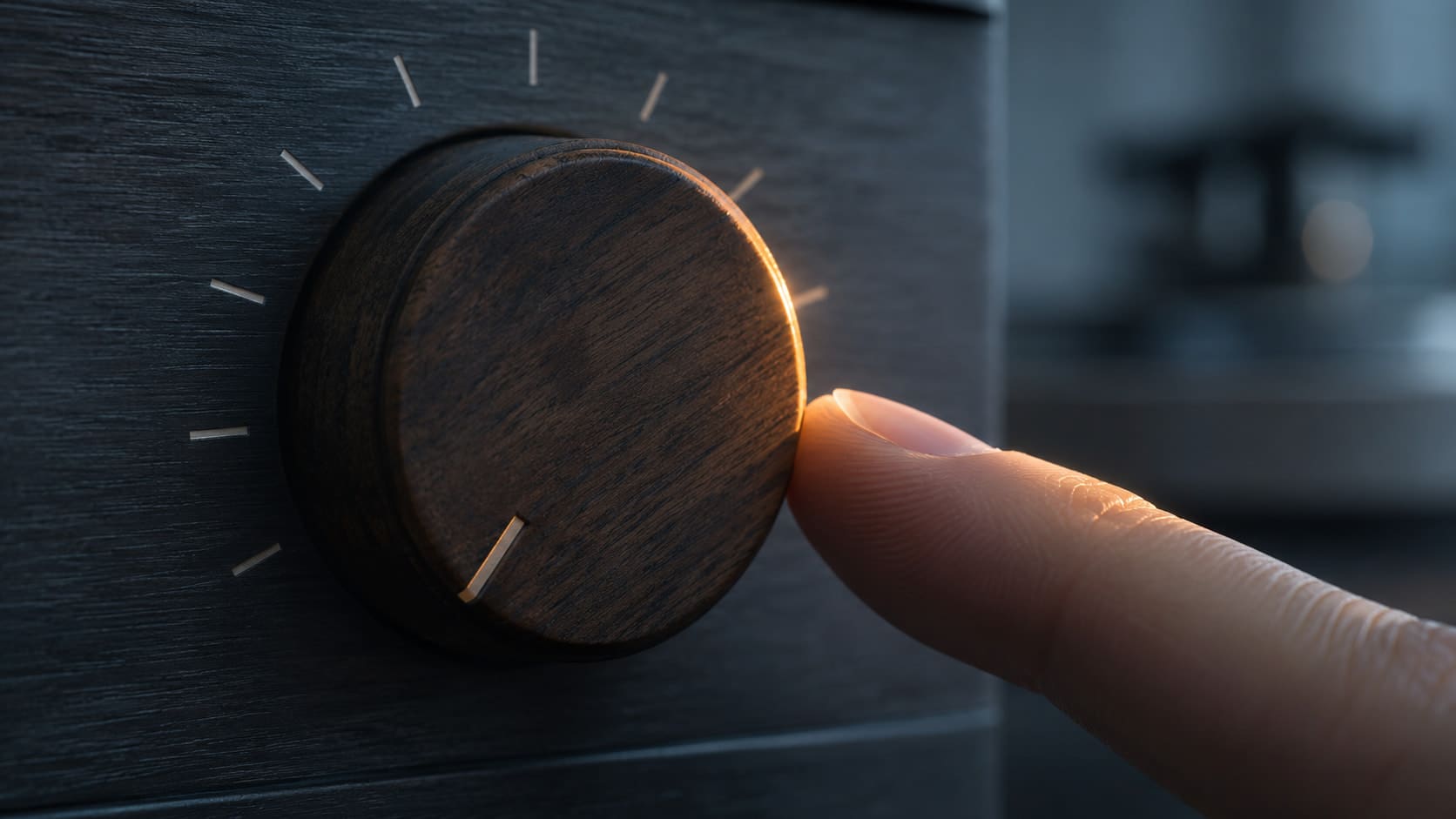
- Numbness is not the absence of feeling. It's a nervous system that turned the volume down, and volume that got turned down can be turned back up.
- Anhedonia responds to treatment. Therapy, a medical check-up, and sometimes medication managed by a prescriber all have a place.
Most people don't come in saying "I have anhedonia." They come in saying some version of why don't I enjoy anything anymore? They liked their friends last year. The music still technically sounds good. Nothing terrible has happened, which somehow makes it worse, because there's no story to point at. Just a life that used to have flavor and now doesn't.
Naming the condition accurately moves the experience out of "something is wrong with me as a person" and into "this is a known thing that clinicians have studied and can treat."
What is anhedonia?
Anhedonia is a noticeable drop in your ability to feel pleasure or interest in things that used to be enjoyable. The word comes from Greek and literally means "without pleasure."
Anhedonia is a symptom, not a diagnosis. Nobody has "anhedonia" the way somebody has strep throat. It's a signal that shows up inside other things, most often depression, but also bipolar disorder, PTSD, schizophrenia, substance use disorder, Parkinson's disease, and traumatic brain injury. Cleveland Clinic puts it plainly: there isn't a specific treatment for anhedonia, because a provider treats the cause underneath it (Cleveland Clinic on anhedonia).
Clinicians also talk about where it shows up. Social anhedonia is the version that hits people: friends, family, conversation, touch, being known. Physical anhedonia is the version that hits the senses: food, music, sex, a hot shower, sunlight on your face. Plenty of people get both. Some people get one and are confused because the other still works fine, which makes them assume this can't be a real thing.
Yet, it is a real thing and a loss of interest in everything you used to care about is not the same as being lazy, ungrateful, or spoiled, no matter what the meanest voice in your head has been saying.
What does anhedonia feel like from the inside?
Almost every page about this defines the word and then stops. Here is what people actually say in my office.
It feels like the world went from color to black and white while everyone else kept their color. That's not my metaphor, that's the one people reach for on their own, over and over, which tells you something about how universal the experience is (Mental Health America on anhedonia).
The anhedonia symptoms people describe most often go something like this:
- You regret or cancel plans you originally looked forward to. You bought the tickets. You wanted this a month ago. Now the night comes and you'd honestly rather not and you can't tell if you're tired or if you just don't care anymore.
- You do the thing and still feel nothing. You go anyway. You're there. The band is good, your friends are funny, and you're standing inside a moment that should feel like something, watching yourself not feel it.
- Eating is not enjoyable. Your favorite meal registers as texture and temperature. You finish it and there's no little hit of satisfaction at the end, just an empty plate.
- Praise feels empty. Someone tells you that you did a great job and you can hear that it's true and it doesn't touch you anywhere.
- You withdraw from friends and loved ones. Not because you're angry at anybody. Connection just costs more than it gives right now, so you start letting texts sit.
- Your interactions become performance based. You laugh at the joke a beat after everybody else, on purpose, because you know it was funny. This is one of the loneliest parts and almost nobody says it out loud.
What separates anhedonia from plain sadness: sadness is a feeling. This is the absence of one. Sadness at least has weather in it. Anhedonia is more like a flat gray sky that doesn't rain and doesn't clear.
Which is exactly why so many people don't ask for help. Nothing hurts badly enough to count as an emergency. There's no dramatic moment to point at. There's just the slow discovery that "nothing makes me happy anymore" and no obvious reason why.

What's the difference between anticipatory and consummatory anhedonia?
Researchers split the loss of pleasure into two kinds.
Anticipatory anhedonia is the loss of the looking forward. It's the reduced ability to feel pleasure in anticipation of something rewarding. In plain terms: the future stopped being interesting. Nothing on the calendar glows. You can't generate the little pull that normally gets you off the couch, because your brain isn't producing the preview of how good it'll feel.
Consummatory anhedonia is the loss of the while it's happening. It's the reduced ability to feel pleasure during the activity itself. In plain terms: you showed up and it didn't land.
Those two live in different parts of the reward machinery, which is why the mix matters clinically (Anhedonia and Depressive Disorders, PMC). Most people have some of each, and one usually runs louder. If your anticipatory side is the loud one, you'll cancel a lot but sometimes enjoy things once a friend drags you out. If your consummatory side is the loud one, you'll keep showing up and keep coming home empty, which tends to be more demoralizing because you did everything right.
This distinction is also why "just force yourself to go" is half-right advice delivered badly. For some people, going is exactly the medicine. For others, going without a plan for what happens when it still feels like nothing just adds evidence to the case they're already building against themselves.
Why do clinicians look for anhedonia when they're assessing depression?
When a clinician is assessing depression, there are two symptoms that carry more weight than the rest: a persistent sad, anxious, or empty mood, and a loss of interest or pleasure in hobbies and activities (NIMH on depression). In the diagnostic manual, the wording for the second one is "markedly diminished interest or pleasure in all, or almost all, activities."
That's why anhedonia gets asked about early. It's not a footnote to depression. For a lot of people it is the depression and the sad part never really shows up at all.
This trips people up constantly. Somebody sits across from me convinced they can't be depressed because they're not crying, not hopeless, not sad in any way they can name. They're just flat. Empty. Going through the motions of a life they used to like. That is a textbook presentation of major depressive disorder, and it goes unrecognized for years because it doesn't match the picture we've all been handed of what depression looks like.
Depression that looks like nothing is still depression. And numbness that has quietly moved in and stayed is worth talking to somebody about, even if you can still get to work on time.
What causes anhedonia?
The best current understanding points at the brain's reward system, the circuitry that handles wanting, anticipating, and following through. Dopamine is the messenger most involved, and it does less of the "this feels nice" job than people assume. Dopamine mostly runs motivation, the pull toward a thing. When that signaling gets disrupted, the pull goes first, and the enjoyment often follows it out the door.
That's the mechanism. The things that disrupt it are a longer list:
- Depression, most commonly, including the long, low-grade kind that has been running quietly in the background for years.
- Other mental health conditions, including bipolar disorder, PTSD, and schizophrenia.
- Medical conditions. Parkinson's disease, thyroid problems, chronic pain, chronic illness, and long stretches of poor sleep can all flatten the reward system. Depression itself frequently rides along with diabetes, cancer, heart disease, and chronic pain.
- Medications. Some medications contribute to low mood and blunted feeling, including some antidepressants at some doses. This is a real, common, and fixable thing, and it is a conversation for the prescriber, never for a blog post.
- Substance use, which can feel like relief, but it's temporary, and many times the substances are actually depressants like alcohol or THC.
- Chronic stress, which is the one almost nobody counts. A nervous system that has spent two years braced does not have much left over for delight.
Please notice how many of those are physical. If your pleasure has gone missing, a check-up with your doctor is not an overreaction, it's a reasonable early step. A provider can rule a lot of this in or out with a physical exam, an interview, and lab work. Fatigue, numbness, and a flat mood have a long list of possible contributors, and some of them are correctable in a way that has nothing to do with your character.
Is emotional numbness the same as not feeling anything?
No.
Emotional numbness is not the absence of feeling. It's a nervous system that turned the volume down. Your nervous system has one job, and it is not to make your life enjoyable. It's to keep you alive. When the input gets to be too much, for too long, one of its available moves is to lower the volume on everything, the bad and the good, because it can't selectively mute only the hard parts. So you get less pain. You also get less music.
That's not weakness and it's not you failing at gratitude. It's a protective setting, and it usually got installed for a reason. Feeling numb is what a system does when feeling everything stopped feeling survivable.
A volume knob that got turned down can be turned back up. Not by force and usually not fast. But the machinery is intact. This is very different from believing the capacity itself is gone, which is the story most people are quietly telling themselves by the time they finally bring it up.
The other useful distinction is anhedonia versus apathy, which get confused constantly. Anhedonia is wanting to enjoy something and finding you can't. Apathy is not having the drive to engage at all. They overlap, they often travel together, and a clinician will want to know which one is louder because it changes where you start.

What helps anhedonia, and when should you get help?
There is no single anhedonia treatment because you don't treat a symptom in isolation. You treat what's underneath it and the symptom lifts as that improves. Here's what that actually looks like.
Behavioral activation. This is the most direct tool we have for this specific symptom, and it's the most counterintuitive: you act first and the motivation shows up afterward. Depression tells you to wait until you feel like it. That day is not coming on its own, because the anticipation circuitry is exactly the part that's offline. So you shrink the action until it's almost insultingly small, you do it without waiting to want to and you pay attention to any flicker of anything during and after. Not joy. A flicker. Ten minutes outside. One song, sitting down, no multitasking. One text to one person. The goal isn't to have a good time. The goal is to give a dimmed reward system something small and repeated to respond to.
Cognitive behavioral therapy. CBT works on the story that grows around the numbness, which is usually some version of I'm broken, this is permanent, and there's no point trying. That story is not a neutral observer. It actively keeps you still, which keeps the input low, which keeps the numbness fed. Naming it and testing it is real work with real effect.
Acceptance and commitment therapy and mindfulness-based approaches. ACT is useful here in a way that surprises people, because it stops making enjoyment the price of admission. You move toward what matters to you based on your values, not based on whether it currently feels good. And mindfulness work rebuilds the ability to notice small, low-grade sensation, which is exactly the muscle that atrophies when everything gets turned down. You practice catching a two out of ten so that a six has somewhere to land later.
A medical work-up. Get the physical contributors looked at. This one gets skipped constantly.
Medication, if it fits. Antidepressants help many people, and for some people a particular medication or dose is actually contributing to the flatness. Both of those are true and neither is something to sort out from an article. That's a conversation with your prescriber, your primary care doctor, your OB, or a psychiatrist and it's a completely reasonable conversation to ask for.
And your nervous system needs the boring things. Sleep, movement, daylight, food, and some human contact. None of that is a treatment plan by itself and I'm not going to insult you by pretending a walk fixes this. But a depleted system has less to work with, and these are the inputs it runs on.
So when should you reach out? When it's been a couple of weeks or more, when it's steady rather than tied to one hard event, or when it's costing you the things and people you care about. You do not need to hit a threshold of suffering to qualify. Earlier is easier, and this is treatable.
If you'd like to talk it through with someone, depression therapy in Georgetown, TX is built around this kind of practical, whole-person work, in person or by telehealth across Texas. For local readers, Unbroken Abundance provides depression counseling in Georgetown, Texas.
You were not made numb on purpose and you didn't do this to yourself. Something turned the volume down while you weren't looking, probably to protect you, and it's been down long enough that you've started to wonder if the sound is gone. It isn't. Frankl's whole point was that we don't get to choose what happens to us, only what we do with the time we're handed, and choosing to say this out loud to somebody is a real thing to do with it.
This article is education and reflection, not a substitute for therapy or medical care, and nothing here is a diagnosis of you. If you are ever in crisis, thinking about harming yourself, or feeling like nothing matters anymore, please call or text 988 in the U.S., any time, to reach the Suicide and Crisis Lifeline. You do not have to carry that alone.
FAQ - Your Questions Answered
How do you know you have anhedonia?
The clearest sign is a sustained drop in pleasure or interest in things that used to be enjoyable, lasting weeks rather than days. Look for a pattern: plans stop appealing, activities feel flat once you're in them, food and music don't register, and people cost more than they give. Only a qualified clinician can determine what's driving it, so treat the pattern as a reason to start a conversation rather than a self-diagnosis.
What is the main cause of anhedonia?
Depression is the most common cause, but anhedonia is a symptom of many things rather than a condition of its own. It's linked to disruption in the brain's reward system and dopamine signaling, which governs motivation and anticipation. It also appears in bipolar disorder, PTSD, schizophrenia, substance use disorder, Parkinson's disease, and traumatic brain injury, and can be affected by chronic stress, poor sleep, other medical conditions, and certain medications.
How do you treat anhedonia?
You treat the condition underneath it. In practice that means psychotherapy, most directly behavioral activation, which has you take small actions before the motivation returns, along with cognitive behavioral therapy for the beliefs that grow around the numbness, and ACT or mindfulness-based work to rebuild your ability to notice small feeling. A medical work-up rules out physical contributors, and medication decisions belong with a prescriber.
Does anhedonia go away?
For most people it improves as the underlying condition is treated, though the timeline varies and progress usually arrives in flickers rather than all at once. Nobody can promise you a specific outcome. What's fair to say is that the capacity for pleasure is generally dimmed rather than destroyed, and that treatment for the condition causing it, most often depression, is well established and helps a great many people.
What can be mistaken for anhedonia?
Apathy is the most common mix-up: with anhedonia you want to enjoy something and can't, while with apathy the drive to engage isn't there in the first place. Burnout, grief, exhaustion, chronic pain, thyroid problems, and side effects from some medications can all look similar from the outside. That overlap is exactly why a medical check-up and a proper assessment are worth doing rather than guessing.
Do people with anhedonia laugh?
Yes, often. You can laugh at a joke, smile at a photo, and be pleasant company while feeling very little on the inside, which is one of the reasons anhedonia gets missed by the people around you. Some of it is genuine reflex and some is performance you've learned to run on autopilot. Looking fine on the outside is not evidence that anything is fine on the inside.
What age does anhedonia start?
It can show up at any age, including in children and teenagers, though it's most often noticed in adolescence and adulthood, when it tends to surface alongside depression. In teenagers it's frequently mistaken for ordinary moodiness or withdrawal. In older adults it's frequently mistaken for aging. In both cases it's worth asking about rather than explaining away.
Is anhedonia the same as depression?
No. Anhedonia is one symptom of depression, and depression involves more, including low mood, changes in sleep, appetite, energy, focus, and self-worth. You can have anhedonia without meeting the criteria for depression, and you can have depression where the flatness is the loudest part and sadness barely appears at all. That last version is common and frequently goes unrecognized for years.