
Complex PTSD vs PTSD: What's the Difference?
By Kitty Ferguson-Mappus, M.S.S.W., LCSW-S · 11 min read

Complex PTSD vs PTSD comes down to two things: how long the trauma lasted, and how much of you it touched. PTSD usually follows a single event. Complex PTSD (C-PTSD) carries every PTSD symptom plus three more: trouble steadying your emotions, a harsh view of yourself, and difficulty feeling safe with people.
The Quick Version
- PTSD often follows a single event. Complex PTSD develops after prolonged or repeated trauma, the kind you could not easily walk away from.
- C-PTSD has all of PTSD's symptoms and adds three: emotional dysregulation, a harsh negative self-concept, and difficulty with relationships.
- The Diagnostic and Statistical Manual of Mental Disorders (or DSM for short) has no separate complex PTSD diagnosis; "complex PTSD" is just the name for its more layered, prolonged-trauma form and is usually named as PTSD - Chronic in formal diagnosing.
- Complex PTSD is not "worse" than PTSD. It is more layered and relationship oriented (though not always), so the healing usually goes steadier and slower.
- Both respond to trauma-focused therapy. There is real hope in recovering from each.
If you found this at 2 a.m., Googling "CPTSD vs PTSD" and trying to figure out which one is yours, I am glad you are here, and I want to take some of the pressure off before we start. You do not have to land on the perfect label tonight. Both of these are real, normal responses to things that should not have happened to you, and neither one means you are broken. The difference between them matters mostly because it points toward the kind of help that actually fits.
The short answer
The difference between PTSD and complex PTSD comes down to the shape of the trauma and how far its effects reach. Here it is at a glance.
| Feature | PTSD | Complex PTSD (C-PTSD) |
|---|---|---|
| Usual cause | A single, time-limited event, like an accident, assault, or disaster | Prolonged or repeated trauma, like childhood abuse, neglect, or an unsafe relationship |
| Core symptoms | Re-experiencing, avoidance, and hyperarousal (feeling constantly on edge) | All of PTSD's core symptoms, plus three more clusters |
| What it adds | None | Trouble regulating emotions, a deeply negative self-view, and difficulty feeling close to others |
| How you're diagnosed in the U.S. | PTSD using the DSM | Still PTSD. There is no separate complex PTSD diagnosis; "complex PTSD" just describes the more layered form. |
What is PTSD?
Post-traumatic stress disorder usually follows a specific, time-limited event, something your system experienced as life-threatening or completely overwhelming. The U.S. Department of Veterans Affairs sorts its core symptoms into three buckets: reliving the event, avoidance of reminders, and hyperarousal, which is the clinical word for staying on edge and keyed up (VA National Center for PTSD).
In real life that looks like flashbacks or nightmares, steering wide of anything that brings the memory back, and a body that stays braced for danger long after the danger has passed. None of that is a character flaw; it is an alarm system that has not gotten the all-clear. Fortunately, PTSD is treatable and a lot of people recover well with trauma-focused care.
What is complex PTSD?
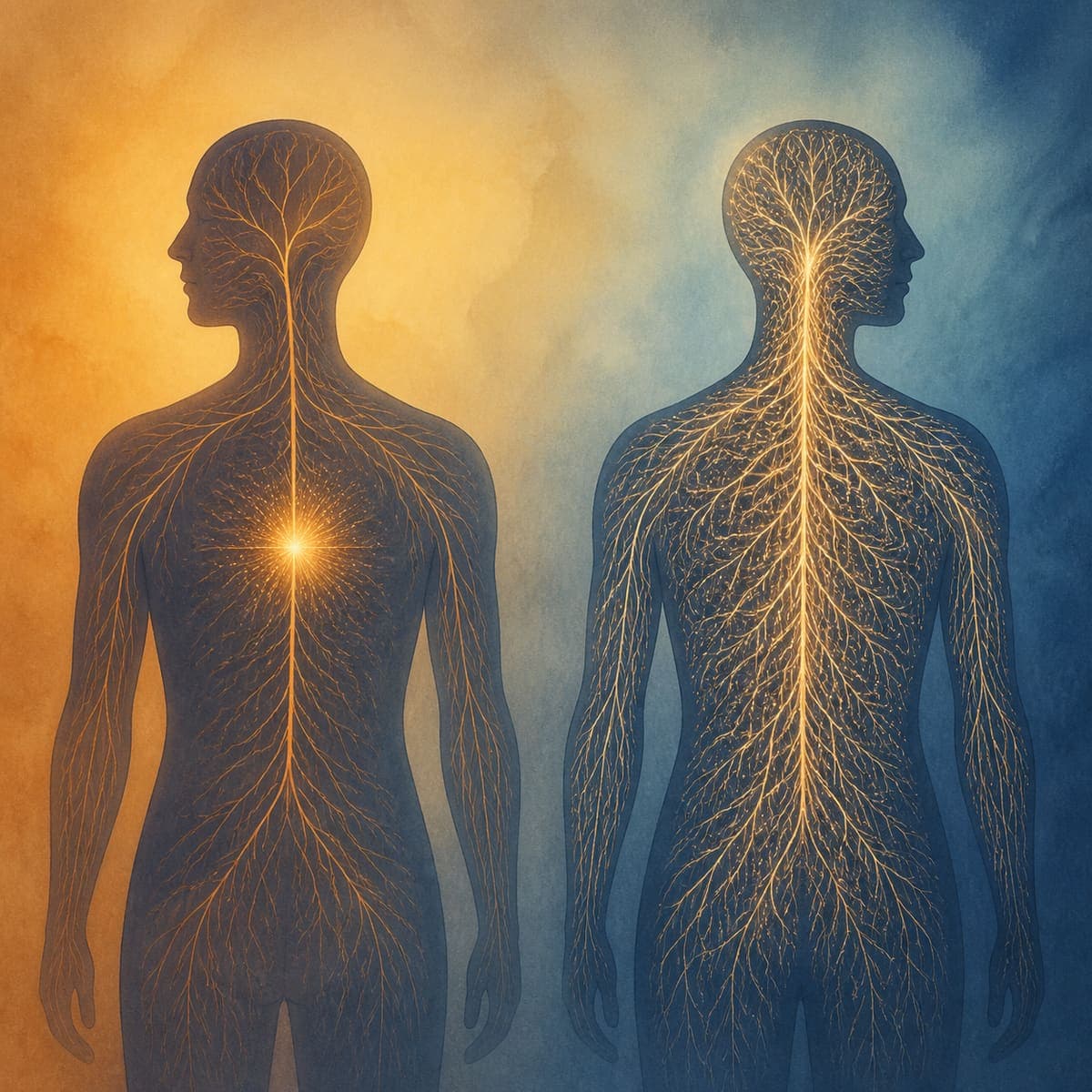
Complex PTSD comes from trauma that was not one moment but a pattern of relational unsafety: childhood abuse or neglect, an unsafe long-term relationship, captivity, any situation where the harm repeated and getting out was not really an option.
In plain talk, C-PTSD has everything PTSD has, and then it adds three more layers of complex PTSD symptoms:
- Trouble regulating emotions. This is emotional dysregulation: feelings arrive big and fast, or they go flat and far away, and they are hard to steady on your own.
- A deeply negative self-concept. Persistent shame, a sense of being worthless or permanently damaged, a belief that the harm says something true about you. It does not.
- Difficulty with relationships. Trust feels risky and closeness feels unsafe, so connection becomes something you both long for and brace against at the same time.
The American Psychological Association puts the core distinction simply: the main difference between complex and non-complex PTSD is the cause. The same kind of traumatic stress, but prolonged instead of singular (APA, "When trauma becomes complex").
Is complex PTSD a real diagnosis?
This is worth getting straight, because we hear it constantly. People come to us and say, "I was diagnosed with complex PTSD." In the US, that almost certainly is not what happened, at least not officially.
Therapists here diagnose from the DSM, and the DSM has no complex PTSD diagnosis. So if a provider, an article, or a quiz told you that you "have complex PTSD," what they were really describing is that your trauma looks like the prolonged, relational, layered kind.
Here is the part I don't want you to hear as a gotcha: that does not make your experience fake. Complex PTSD describes something real, and it is a widely used, well-studied way to talk about trauma that built up over time. We point it out because the distinction actually matters for you. It shapes how your treatment is paced and what your insurance will recognize as well as being a point of confusion for many people.
So, is complex PTSD a real diagnosis? The experience behind it is real.
Where PTSD and complex PTSD overlap
Here is something the internet often skips: these two share most of their ground. Both can bring intrusive memories, nightmares, and flashbacks. Both can drive you to avoidance of the people and places that feel loaded. Both can leave you startling at nothing, sleeping badly, and stuck in hyperarousal. The shared fight-or-flight reactions can include:
- Intrusive thoughts, nightmares, or flashbacks that arrive uninvited.
- Avoiding people, places, or conversations that circle too close to the wound.
- Dissociation, which is going numb or checked out when things get to be too much.
That heavy overlap is exactly why the two get confused, and why a careful look from an actual clinician matters more than a quiz you took online. The three extra C-PTSD clusters (your emotions, your self-worth, and your relationships) are usually what tips the picture from one to the other.
What does complex PTSD look like day to day?
Because those clusters can be abstract, let's get real... Emotional dysregulation might mean a small disappointment knocks you flat for two days, or that you feel nothing at all when you expected to feel a lot. The negative self-concept might sound like a running commentary that you are too much, not enough, or somehow the problem in every room you walk into. The relationship piece might look like wanting closeness and then bracing the second someone actually offers it, or reading a neutral text as proof that you did something wrong.
If you read that and felt called out, I get it... pause here for a sec and catch your breath before continuing...
Researchers who study these symptom clusters describe complex PTSD as resembling an enhanced version of PTSD, with shame and a sense of being permanently damaged layered on top (National Institutes of Health review).
Is complex PTSD "worse" than PTSD?
People ask whether complex PTSD is worse than PTSD constantly, and it deserves a straight, gentle answer. It is not "worse." It is more layered. More of you got touched, so there is more to tend, and the healing usually asks for more time and more steadiness.
That is not a statement about you, but knowing the trauma was prolonged helps explain why the effects reached past the flashbacks and into how you see yourself and how safe you feel with people. It also explains why a quick fix was never realistic, and why it was never fair to expect one of yourself.
How does treatment differ?
Both PTSD and complex PTSD respond to trauma-focused therapy. The difference is mostly pace and order.
With single-event PTSD, treatment can sometimes move fairly directly to processing the memory once safety and trust are in place. With complex PTSD, good care usually takes a phased approach. First comes stabilization: grounding skills, steadying the nervous system, building enough safety to do the deeper work. This part can feel slow, but slow is often wise. It is teaching your system that you can feel something hard without getting swallowed by it. One phrase therapists often use is "Fast is slow and slow is fast." To describe therapy with this kind of presentation, meaning that if we go too fast, healing happens slower and if we move at a slow pace, you actually heal faster.
It's not a stall tactic because going to the hardest memory before your system has any footing tends to overwhelm rather than heal, and your nervous system has already done plenty of white-knuckling without any help from a therapist. Building the floor first is what makes the rest of the work possible, and survivable, and eventually even lighter than you expect.
From there, trauma-focused methods like EMDR help the brain reprocess what got stuck, and approaches like Internal Family Systems work gently with the protective and wounded parts that prolonged trauma tends to create. When the trauma started early, the work often includes the beliefs and body memories that formed before you had words for any of it. You can read more in our guide to EMDR for childhood trauma. The throughline is the same one I come back to with every client: anything that was learned can be unlearned.

How can you tell which one fits you?
Please do not diagnose yourself from a blog post. I mean that with love. That is genuinely a job for you and a qualified clinician together, and the internet's habit of slapping a C-PTSD label on every hard feeling does not actually help anyone heal.
What you can do is notice patterns. If your distress traces back to one identifiable event, PTSD may be the closer fit. If it traces to something that went on for a long time, and it shows up not just in flashbacks but in how you feel about yourself and how safe you feel around people, complex PTSD may describe it better. Either way, the label matters far less than what helps. Confusion about which one you have does not mean your pain is small. It usually means the experience was layered, and you deserve care that meets all of it. A lot of the 7 signs of trauma point in this direction long before anyone reaches for a clinical name.
When you are ready, trauma therapy in Georgetown, TX can help you sort out what you are carrying and start, slowly, to set it down, in person or by telehealth across Texas. If you are ever in crisis, please call or text 988 in the U.S. to reach the Suicide and Crisis Lifeline.
This article is education and reflection, not a substitute for therapy or a diagnosis. If you would like to talk with one of our therapists, reach out using the button below.
FAQ - Your Questions Answered
How do I know if I have complex PTSD or PTSD?
The clearest clue is the shape of the trauma. PTSD tends to follow a single event, while complex PTSD follows prolonged or repeated trauma and reaches into your emotions, your self-worth, and your relationships. Only a qualified clinician can sort this out with you, so treat these patterns as a reason to ask, not as a self-diagnosis.
Can you be diagnosed with complex PTSD?
Not in the US. The DSM that American therapists diagnose from does not include complex PTSD, so what goes on your chart and your insurance claim is PTSD. That does not make the experience less real. "Complex PTSD" is just a widely used description of the prolonged, layered kind of trauma, not a separate diagnosis you can receive here.
Is complex PTSD more serious than PTSD?
It is more layered, not more shameful and not more hopeless. Because complex PTSD touches more areas (emotions, self-concept, and relationships), treatment usually goes steadier and more phased. That is about fit and pace. It is not a ranking of how "bad" your trauma was or a measure of how strong you are.
What are the 17 symptoms of complex PTSD?
There is no official list of exactly 17 symptoms of complex PTSD. That number floats around online, usually borrowed from older counts of PTSD symptoms. The clearer way to think about it: complex PTSD includes the core PTSD symptoms (re-experiencing, avoidance, and hyperarousal) plus three added clusters, which are emotional dysregulation, a negative self-concept, and difficulty with relationships. A clinician looks at those patterns together rather than counting items on a checklist.
What are the 4 F's of complex PTSD?
The "4 F's" are four common survival responses: fight, flight, freeze, and fawn. Fawn, which means appeasing or people-pleasing to stay safe, often stands out in complex trauma, because keeping other people happy may have been the safest move available to you for a long time. These are survival strategies, not flaws, and therapy can help loosen the ones that are not serving you anymore.
Can you have both PTSD and complex PTSD?
In real life the experiences can overlap, and someone with a history of prolonged trauma may also have lived through a single acute event. What matters more than the exact label is a careful assessment and a treatment plan paced to everything you are actually carrying. A trauma-focused therapist can help you map that out.
Can complex PTSD be cured?
"Cured" is not really the right frame, and I would be wary of anyone who promises it. What I can say honestly is that complex PTSD responds to treatment, and a lot of people move from surviving to genuinely living. The goal is not erasing your history. It is loosening its grip so the past stops running your present, and that is realistic for most people who get the right support.
What kind of therapy is best for complex PTSD?
There is no single best therapy, but the ones with the strongest track record for complex trauma are the trauma-focused, phased approaches: EMDR, Internal Family Systems, and somatic work, usually starting with stabilization before any deep processing. The fit between you and your therapist matters as much as the method. What you want is someone trained in complex trauma who will go at your pace, not push you off a cliff.